


3D printing is a fun hobby, but choosing the right filament can sometimes be pretty complicated. With so many options, ASA and PETG are often popular choices for both beginners and experienced hobbyists. So, which one should you choose?
Let's dive deeper into ASA and PETG and figure out which filament best suits your projects.
What is ASA filament?
ASA, also known as Acrylonitrile Styrene Acrylate, is a filament known for its excellent weather resistance and durability. This makes it a favorite among those looking to create outdoor projects that can withstand the elements. But what makes ASA so special?
Awesome chemical composition
ASA is composed of Acrylonitrile, Styrene, and Acrylate. This unique mix ensures the filament is resistant to UV light. It won't discolor or break down when exposed to sunlight. This makes ASA the best filament for prints that will be used outdoors.
Highly durable and top-tier UV resistance
ASA is extremely durable and resistant to chemicals and mechanical stress. Its UV resistance makes it perfect for outdoor use, such as garden furniture or outdoor decorations. It doesn't degrade from radiation.
Printing with ASA
If you want to print with ASA, you need to use the right settings. The ideal print temperature is between 240°C and 260°C, with a bed temperature of about 90°C to 110°C. It's also important to have an enclosed print environment to prevent warping.
What is PETG filament?
PETG, or Polyethylene Terephthalate Glycol, is a versatile filament known for its strength and flexibility. It's a great choice for projects that need to be both robust and easy to print. But what are the characteristics of PETG?
A mix of well-known filaments
PETG combines the strength of ABS with the user-friendliness of PLA. It contains glycol, which ensures the filament is less brittle and easier to print. This mix also makes it less susceptible to chemical reactions.
Printing with PETG
The ideal printing temperature for PETG is between 220°C and 250°C, with a bed temperature of about 70°C to 85°C. It has good bed adhesion and usually doesn't require an enclosed print environment, making it a more user-friendly material. However, an enclosed printer is generally quite handy.
Durability and flexibility
PETG is very strong and flexible, meaning it can withstand impact and bending without breaking. This makes it ideal for functional parts and prototypes that require durability without sacrificing flexibility.
The differences at a glance
When comparing ASA and PETG, there are a few key differences to keep in mind. Let's lay these differences side by side.
Strength and flexibility
ASA is very strong and resistant to mechanical stress, but it lacks the flexibility that PETG has. PETG combines strength with a certain degree of flexibility, making it ideal for parts that need some give.
Temperature resistance
ASA excels in temperature resistance and can withstand high temperatures without deforming. This makes it suitable for applications in warm environments. PETG also has good temperature resistance, but it isn't as heat-resistant as ASA.
Areas of application
ASA is often used for outdoor projects because of its UV resistance and durability. Think of garden furniture, outdoor housings, and car parts. PETG, on the other hand, is more versatile and can be used for a wide range of applications, from functional prototypes to home decor.
Frequently asked questions
Which filament is better for outdoor projects?
ASA is the best choice for 3D prints that will be used outdoors. This is due to its excellent UV resistance and durability. It doesn't discolor or break down from exposure to sunlight, which makes it great for long-term outdoor use.
Is PETG easy to print?
Yes, PETG is relatively easy to print. It has good bed adhesion and usually doesn't require an enclosed print environment. It combines the strength of ABS with the user-friendliness of PLA, making it a popular choice for both beginners and experienced users.
What are the ideal temperature settings for ASA and PETG?
For ASA, the ideal print temperature is between 240°C and 260°C, with a bed temperature of about 90°C to 110°C. For PETG, the print temperature is between 220°C and 250°C, with a bed temperature of about 70°C to 85°C. It is important to experiment with these settings to get the best results.
Conclusion
Both ASA and PETG have their own unique advantages and applications. ASA, with its UV resistance and durability, is perfect for outdoor projects that need to withstand the elements.
PETG, with its combination of strength and flexibility, is versatile and easy to print, making it an ideal choice for a wide range of projects.
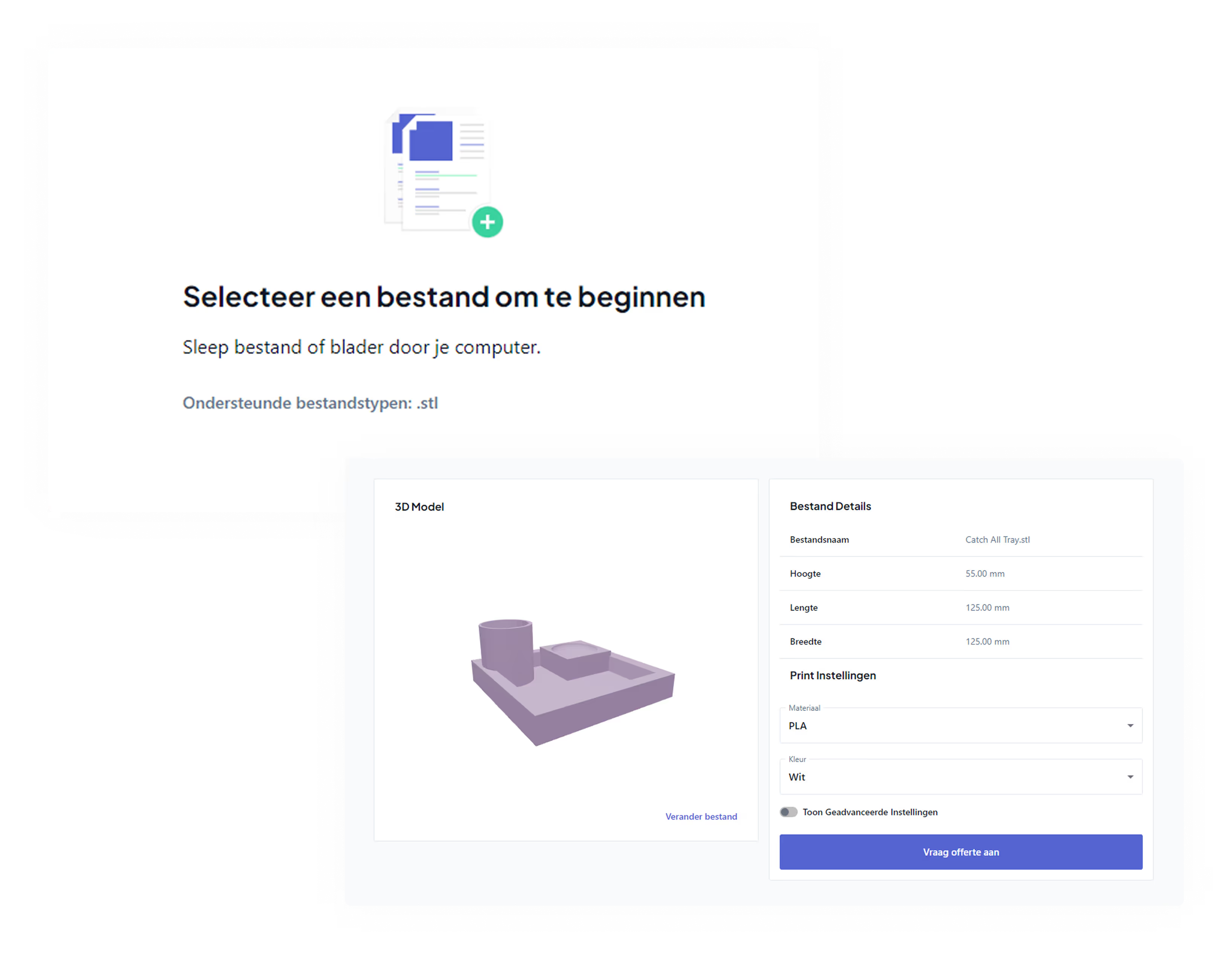
Looking to have something printed in ASA or PETG? Use our 3D printing service.