


What is PETG?
PETG is a 3D printing material. The abbreviation stands for polyethylene terephthalate glycol. It is a variant of PET, the plastic used in soda bottles, with glycol added. This addition makes the material less brittle, easier to process, and more impact-resistant.
The result is a filament that combines the printability of PLA with the strength and chemical resistance of ABS. This makes PETG popular for both functional parts and decorative prints.
The properties of PETG filament
The tensile strength of PETG is higher than that of PLA, but lower than ABS. The material is slightly flexible; it bends rather than breaks. This makes it suitable for parts that are subjected to shocks or bending forces.
The glass transition temperature of PETG is around 80–90 °C. This makes it more heat-resistant than PLA (55–65 °C), but less so than ABS (100 °C+) or ASA (~100 °C).
Chemical resistance is a strong point of PETG. It is resistant to oils, greases, alcohol, and mild detergents. Acetone is an exception, as it will dissolve the material.
Layer adhesion for PETG is excellent. This ensures strong and consistent prints with little risk of delamination. This is the process where the various layers that make up a material come apart.
Warping rarely occurs with PETG compared to ABS. However, it is more prone to stringing, which are thin strands of plastic that can form between printed elements. You can solve this with the right retraction settings and by keeping the filament dry.
PETG is not biodegradable. It is a petroleum-based plastic. However, variants based on renewable raw materials are available.
Advantages of PETG
This filament combines properties that are usually found separately in other materials. The main benefits:
- It is strong yet slightly flexible, which prevents breakage upon impact.
- Its chemical resistance makes it suitable for functional applications.
- It is highly printable, with less hassle regarding warping compared to ABS.
- The glass transition temperature of 80–90°C makes it more heat-resistant than PLA.
- It has a slightly glossy, uniform finish that looks professional.
Disadvantages of PETG
The filament also has its limitations.
- It is less rigid than PLA and ABS, which is a disadvantage for parts that should not flex.
- The risk of stringing is higher than with PLA, although this can be easily managed with settings.
- PETG is not UV-resistant for long-term outdoor use; for that, you are better off choosing ASA.
- It weighs slightly more than PLA due to its higher density. This can also be an advantage.
The best PETG print settings
It is good to know that print settings can vary by brand. Use this as a guideline and always check the packaging or product specifications.
The ideal print temperature is between 230 and 250 °C, depending on the brand and printer. Start at 235 °C and adjust based on the results. Too low leads to poor layer adhesion; too high increases the risk of stringing.
The bed temperature should preferably be 70–85 °C. A heated bed is not strictly required, but it does improve adhesion to the print surface and reduces the risk of warping.
Still having issues with warping? Apply some glue to the print bed.
You can keep the print speed the same as for PLA, around 50–70 mm/s. PETG is not overly sensitive to high speeds, but lower speeds will yield better results for complex geometries.
Retraction is a key factor with PETG due to the higher risk of stringing. Use a retraction speed of 25–45 mm/s and a retraction distance of 0.4–1 mm for a direct-drive extruder, or 3–6 mm for a Bowden extruder.
Set your cooling fan lower than you would for PLA, between 30 and 60%. Too much cooling will weaken layer adhesion with PETG.
For infill , 20–40% is sufficient for most applications. If you need maximum strength, go for 50%+.
What is the difference between PLA and PETG?
This is the most frequently asked question about PETG, and for good reason—they are the two most popular FDM materials.
PLA is the easiest material to print; it’s biodegradable and affordable. However, it starts to deform at 55–65 °C and is less resistant to moisture and chemicals. PLA is the right choice for decorative objects, models, and prints that won't be under mechanical stress.
PETG is stronger, more heat-resistant (80–90 °C), and more resistant to moisture, oils, and mild chemicals. It’s slightly trickier to dial in than PLA, but more reliable than ABS. It’s the right choice if you want to print something functional that requires strength or moisture resistance.
In short: use PLA for decorative prints and PETG for functional ones. Still not sure which material you need? Use our material selection guide.
PETG vs. ABS
ABS is more heat-resistant than PETG (with a glass transition temperature above 100 °C) and has a slightly higher tensile strength. However, ABS is prone to warping, releases harmful fumes during printing, and requires an enclosure for good results.
PETG is easier to print, warps less, is safer to use, and has better impact resistance. For most applications where you might consider ABS, PETG is a better and simpler choice. Read more in our comparison: ABS vs PETG.
PETG vs. ASA
Is your print going outside? Then you're better off choosing ASA. This is specifically developed for UV-exposed use and retains its properties during long-term exposure to sun, rain, and temperature fluctuations. PETG can discolor and degrade slightly after prolonged outdoor use.
Read the full comparison article: ASA vs PETG. Want to know which materials perform best in an outdoor environment? Then read: the 3 best 3D printing materials for outdoor use.
PETG applications
PETG is a versatile material suitable for a wide range of prints.
Functional parts are the best use cases. Think of gears, hinges, clamps, housings, and mechanical parts that need to withstand stress. The combination of strength and slight flexibility makes PETG excellent for this.
Prototypes that need to mechanically resemble the final product benefit from PETG's good dimensional accuracy and printability.
Water-resistant prints like containers, holders, and housings that come into contact with moisture. PETG is moisture-resistant and corrosion-resistant.
You can print food-safe items with PETG, but only if the filament is explicitly certified as food-safe. If a company wants to print food-safe items, they must comply with various documentation requirements, production environment standards (GMP), and other regulations.
PETG is also ideal for technical housings around electronics, sensors, or mechanical components. These are applications where PETG's temperature resistance and chemical resistance are the deciding factors.
Frequently asked questions about PETG
Is PETG stronger than PLA?
Yes, PETG has a higher impact strength than PLA. It is slightly flexible and less likely to break under shock loads. PLA is stiffer but more brittle; upon hard impact, PLA will break sooner than PETG.
Is PETG food-safe?
Not by default. Some PETG filaments are certified as food-safe by the manufacturer, but this does not apply to all PETG variants. Furthermore, the porosity of the print and the condition of the nozzle can affect food safety. Always check the certificate of the specific filament if you want to use something that will come into contact with food.
Can PETG go in the dishwasher?
Be careful. The glass transition temperature of PETG is around 80–90°C. Filament might hold up in a dishwasher on a short, low-temperature cycle, but there is a risk of warping with higher-temperature programs. For dishwasher-safe use, a higher glass transition temperature is preferred; consider ABS or ASA instead.
How do you glue PETG?
Acetone dissolves PETG, making it the most common method for bonding PETG parts. Apply a small amount of acetone to the surfaces to be joined, press them together, and let them cure. Cyanoacrylate (super glue) also works, but provides a weaker bond.
Is PETG toxic?
PETG produces fewer harmful fumes during printing than ABS. No known toxic substances are released in dangerous concentrations at normal printing temperatures. Good ventilation is always recommended, but PETG is considered one of the safer FDM materials.
Is PETG suitable for outdoor use?
It works for short-term or protected outdoor use, but ASA is the better choice for long-term UV exposure. PETG can discolor and slightly degrade after months of direct sunlight. Read more about the best materials for outdoor use.
Get something printed in PETG
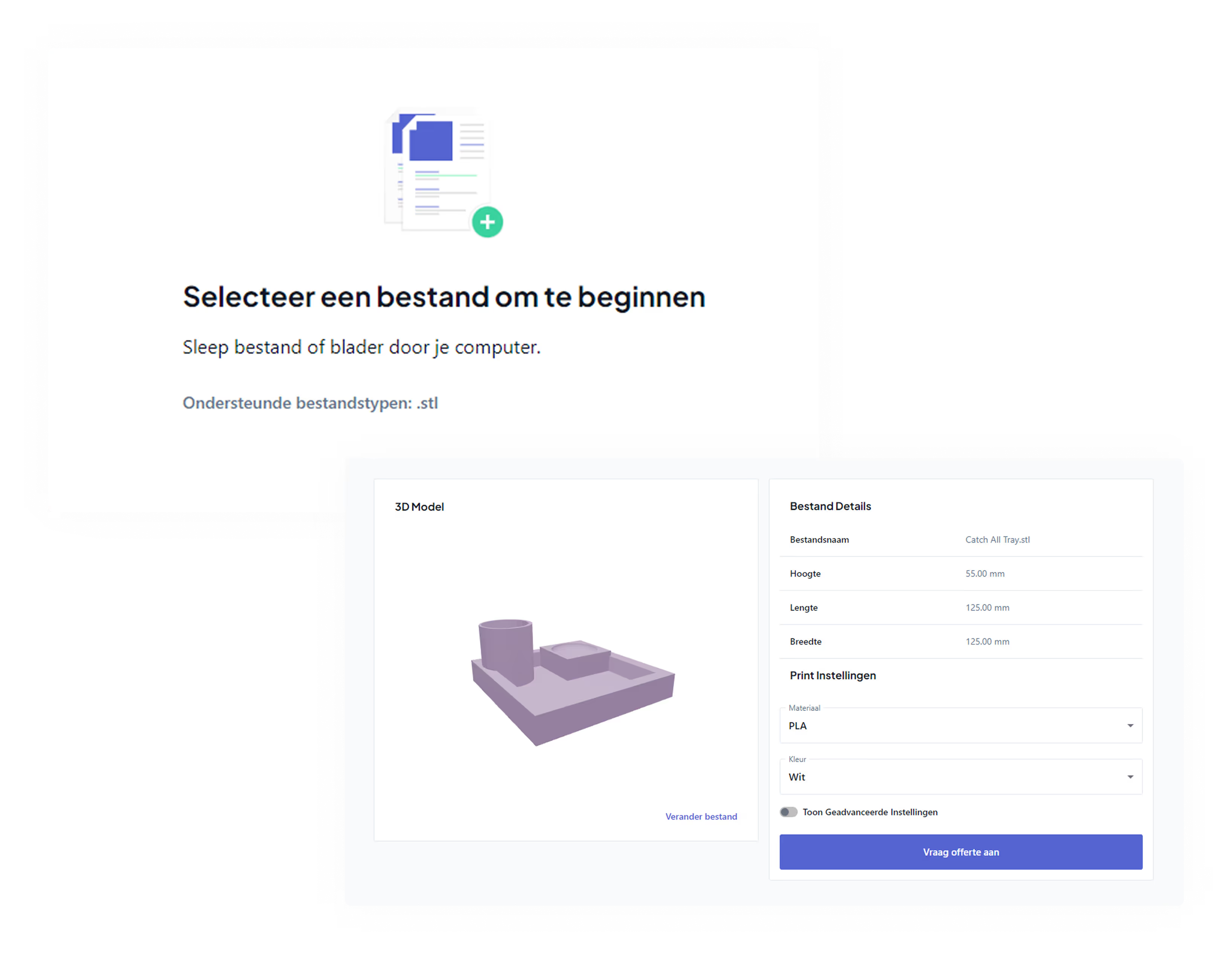
Do you know that PETG is the right material for your project? Upload your STL file to our 3D print price calculator and calculate the price instantly. PETG is available as a standard material.
Still unsure which material best suits your application? Use our material selection guide or request a free printability check — we'll take a look for free.
Want to know what it costs? Read: how much does 3D printing cost.