


If you’re a 3D printing enthusiast, product designer, or DIYer, you’ve likely heard of ABS and PETG filaments. But how do you pick the right one for your project? We’ve mapped out the differences between these filaments to help you make an informed decision.
What is ABS filament?
ABS (Acrylonitrile Butadiene Styrene) is one of the oldest and most widely used filaments in 3D printing. This thermoplastic polymer is made of three components: acrylonitrile, butadiene, and styrene. Acrylonitrile provides chemical resistance and hardness, butadiene adds toughness and impact resistance, and styrene gives the material its workability and glossy finish.
Properties that can take a hit
ABS filament is strong, flexible, and durable. It can withstand temperatures up to 100 degrees Celsius and resists chemicals, making it an excellent choice for functional parts and prototypes. It’s also relatively inexpensive and easy to find.
Applications
Because of its robust properties, ABS is often used in the automotive industry, for toys (think LEGO bricks), and in household appliances. It’s also a popular choice for 3D-printed prototypes and functional components.
Printing with ABS filament
If you want to print with ABS, you’ll need a heated print bed and an enclosed printer housing to prevent warping and cracking. The filament can give off a slight odor while printing, so make sure you have good ventilation.
What is PETG filament?
PETG (Polyethylene Terephthalate Glycol) is a relative newcomer to 3D printing, but it has quickly gained popularity due to its ease of use and versatility. The filament is quite similar to PET, the material used to make soda bottles at the supermarket.
Combined properties
PETG filament combines the best features of ABS and PLA. It’s strong, flexible, and has a temperature resistance of about 80-85°C. Plus, it’s chemically resistant and virtually odorless during printing.
The various applications of PETG
PETG is often used for food packaging, medical applications, and outdoor projects thanks to its durability and safety. It’s also popular for 3D-printed parts that need to be clearer and smoother, such as lampshades and transparent containers.
How do you print with PETG?
Printing with PETG is easier than with ABS. It doesn't require an enclosed printer and is less prone to warping. However, a heated print bed is still recommended for the best results.
The differences at a glance
Now that we've covered the basic characteristics of ABS and PETG , let's take a look at the main differences between these two filaments.
Strength and flexibility
ABS and PETG are both strong and flexible, but in different ways. ABS is slightly stiffer and better at handling physical stress, while PETG offers more flexibility without snapping. Depending on your specific project needs, one may be better suited than the other.
Temperature resistance
ABS can withstand higher temperatures than PETG, making it suitable for applications where heat resistance is key. However, PETG also has good temperature resistance and is sufficient for most everyday conditions.
Chemical resistance
Both filaments are chemically resistant, but PETG has the edge when it comes to resisting acids and solvents. This makes PETG a better choice for applications involving chemical exposure.
Areas of application
ABS and PETG both have their specific uses. ABS is ideal for functional parts that require durability and heat resistance, such as automotive parts and industrial components. PETG, on the other hand, is excellent for applications where clarity, flexibility, and chemical resistance are important, such as medical devices and packaging.
Frequently asked questions
Is ABS stronger than PETG?
ABS and PETG both have their strengths. ABS is slightly stiffer and handles physical stress better, while PETG is more flexible and less prone to breaking. The choice between the two depends on the specific requirements of your project.
Which filament is better for beginners?
PETG is generally easier to print and doesn't require special features like an enclosed printer housing. This makes PETG a better choice for those new to 3D printing.
Can you use ABS and PETG together?
Although ABS and PETG have different properties, they can sometimes be used together in a single project. It is important to keep in mind that they require different print settings and conditions for optimal results.
Conclusion
Choosing between ABS and PETG filament depends on your specific needs and goals. Both materials have unique properties that make them suitable for different applications. ABS offers excellent heat resistance and stiffness, while PETG provides more flexibility, chemical resistance, and ease of use.
For 3D printing enthusiasts, product designers, and DIY hobbyists, it is important to experiment with both materials to discover which works best for your projects. Remember that there is no single right answer; the best choice depends on what you are trying to achieve.
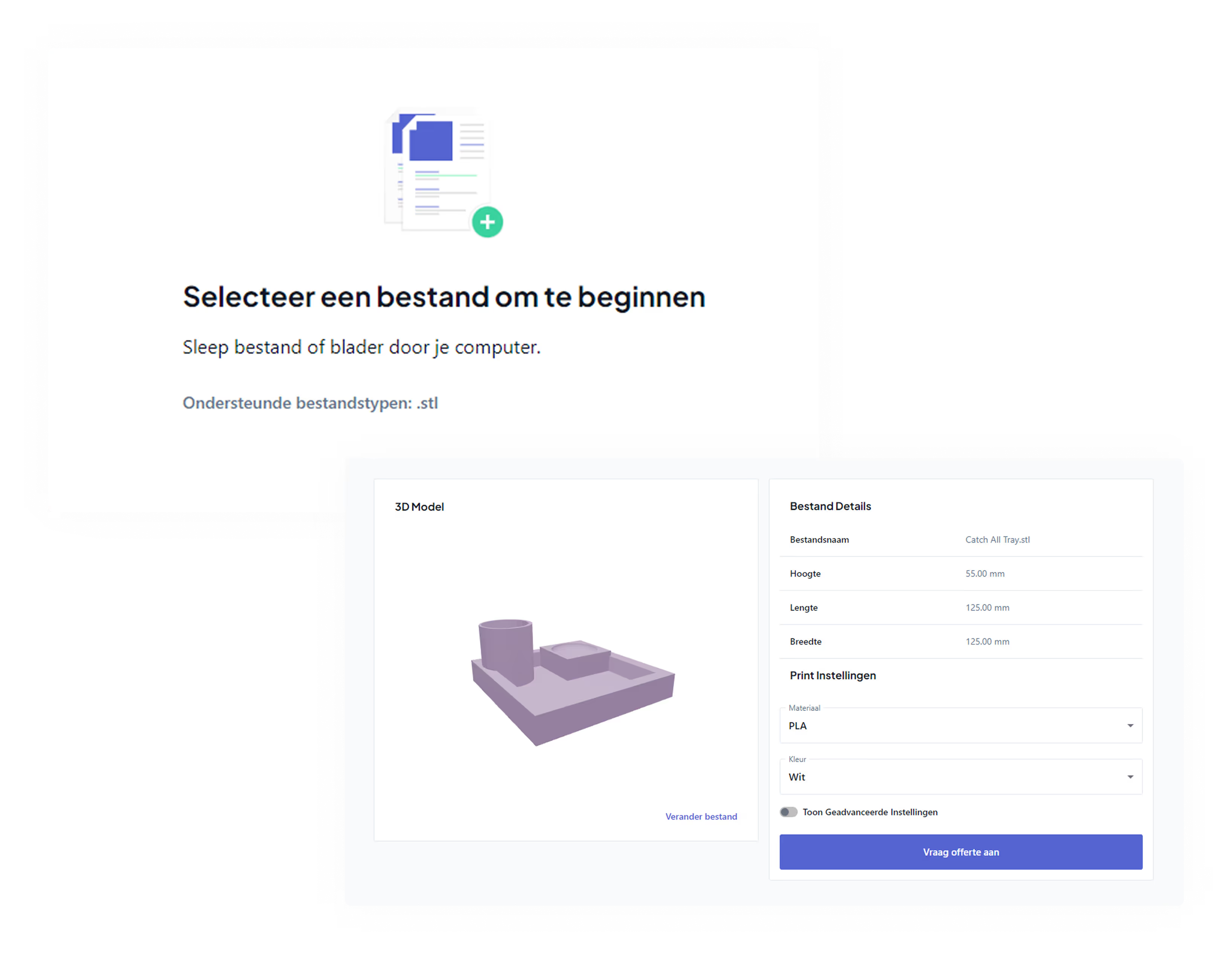
Want to have something printed in ABS or PETG? Use our 3D printing service.