


Types of 3D printers
These are the most common 3D printers:
- Fused Deposition Modeling (FDM)
- Stereolithography (SLA)
- Digital Light Processing (DLP)
- Selective Laser Sintering (SLS)
- Material Jetting
Fused Deposition Modeling (FDM)
FDM stands for Fused Deposition Modeling and is the most common and popular type of 3D printer. An FDM printer works by melting thermoplastic materials (plastic materials that soften when heated), such as ABS, PLA, or nylon, and then building the object layer by layer. FDM 3D printers are popular because they are relatively affordable and easy to use.
The pros of FDM printers:
- Affordable and easy to use
- Versatile and can be used for creating prototypes, tools, accessories, and toys.
- Wide selection of materials available
- High speed when printing larger objects
The cons of FDM printers:
- Less accurate and detailed than other types of 3D printers
- Possibility of visible layers on the final product
- Less suitable for producing complex models with support structures/pillars
Stereolithography (SLA)
Stereolithography (SLA) is a type of 3D printing technology that uses a laser to cure liquid resin, building the desired object layer by layer. SLA 3D printers are capable of printing highly detailed and precise objects, making them popular with professionals and companies specializing in product design and development.
The advantages of SLA printers:
- Highly precise and detailed objects
- Large selection of materials available
- Ability to print multiple objects at once
The disadvantages of SLA printers:
- More expensive than FDM 3D printers
- Requires a higher level of technical expertise to operate
- Smaller build volume than FDM 3D printers
Digital Light Processing (DLP)
Digital Light Processing (DLP) is a 3D printing technology similar to SLA, but instead of a laser, it uses a projector to cast a pattern of light onto liquid resin, building the desired object layer by layer. DLP 3D printers are capable of printing highly detailed objects with high resolution.
The advantages of DLP printers:
- Highly precise and detailed objects
- Fast and efficient printing of multiple objects simultaneously
The disadvantages of DLP printers:
- More expensive than FDM 3D printers
- Fewer materials available compared to FDM 3D printers
- Can result in visible layers on the final product
Selective Laser Sintering (SLS)
Selective Laser Sintering (SLS) is a 3D printing technology that uses a laser to fuse powdered materials, building the desired object layer by layer. SLS 3D printers can produce highly complex and detailed objects and are popular with professionals in the aerospace and medical industries.
The advantages of Selective Laser Sintering (SLS):
- Highly accurate and detailed objects
- Wide selection of materials available
- Ability to produce highly complex and detailed objects
The disadvantages of Selective Laser Sintering (SLS):
- More expensive than FDM and SLA 3D printers
- Less user-friendly and requires a higher level of technical expertise
- Slower printing process than FDM 3D printers
Material Jetting
Material Jetting is a 3D printing technology that uses an inkjet printer to deposit liquid photopolymer, which is then cured using UV light. Material Jetting 3D printers are capable of producing highly detailed objects with high resolution, making them popular with professionals in the dental and jewelry industries.
The advantages of Material Jetting printers:
- Highly accurate and detailed objects
- Wide selection of materials available
- Ability to use multiple materials simultaneously
The disadvantages of Material Jetting printers:
- More expensive than FDM 3D printers
- Smaller build volume than FDM 3D printers
- Slower printing process than FDM 3D printers
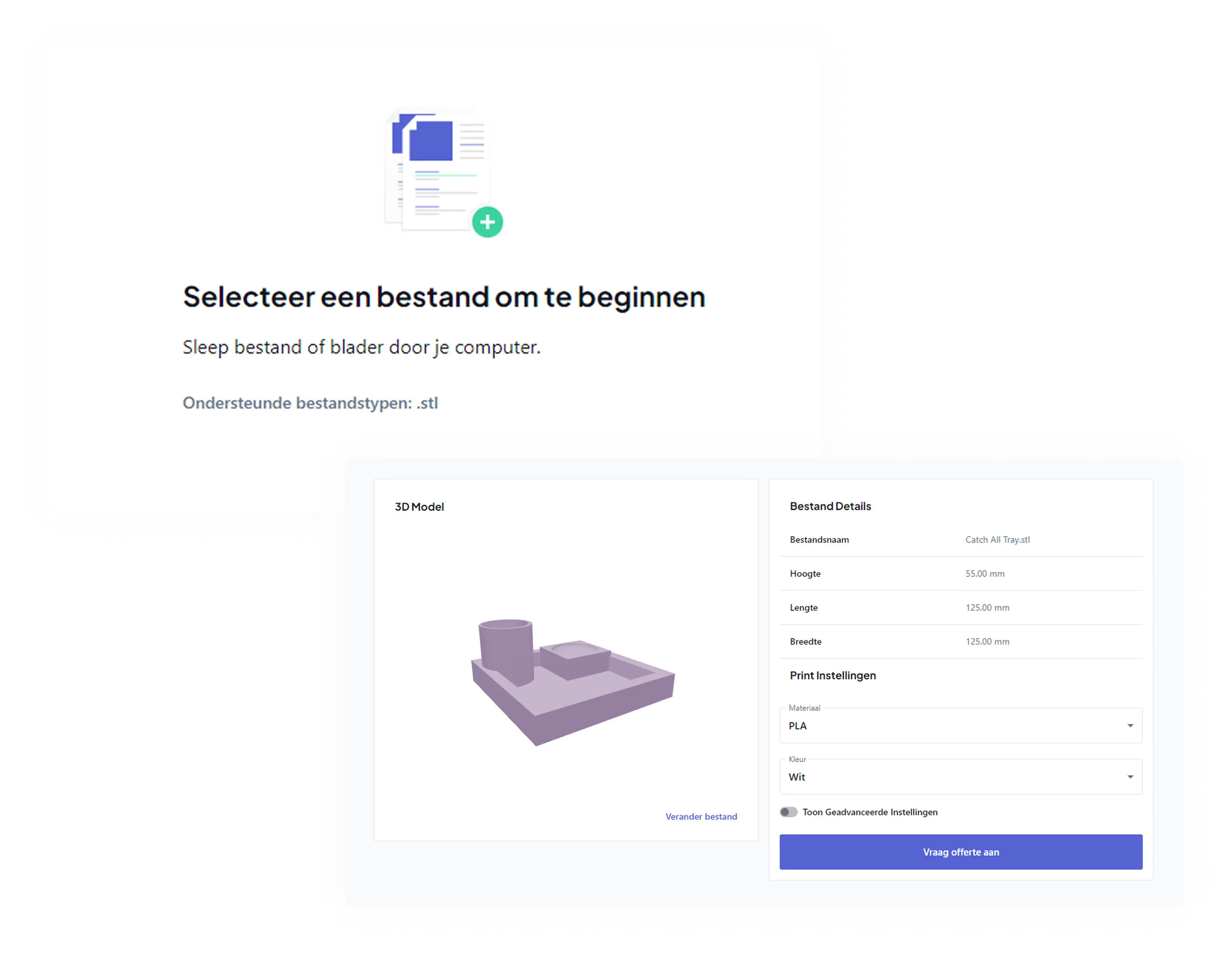
Looking to get something printed on an FDM printer? Use our 3D printing service.