


PLA vs. ABS: PLA is the easiest to print and is ideal for decorations and prototypes. ABS is stronger and more heat-resistant, but harder to print and the go-to for technical parts.
The key differences at a glance:
- Strength: ABS is tougher and more impact-resistant. PLA is stiffer, but more prone to snapping under impact.
- Heat resistance: ABS holds up well above 100°C. PLA starts to deform around 55–60°C.
- Ease of printing: PLA prints on almost any printer. ABS warps easily and requires a closed-chamber printer.
- Odor and safety: ABS releases fumes during printing and requires ventilation. PLA is virtually odorless.
- Environment: PLA is made from renewable resources, while ABS is petroleum-based, though "biodegradable" is a bit more nuanced than it sounds.
Quick choice: PLA or ABS?
Choose PLA if you're printing something decorative, making a prototype for visual inspection, want fine details, or are just starting out with 3D printing. For indoor objects that won't be exposed to heat or heavy impact, PLA is the easiest and most cost-effective choice.
Choose ABS if your part needs to withstand heat, take a hit, or handle mechanical stress, and you don't mind the trickier printing process. Think of technical parts for indoor use, housings near heat sources, or functional machine components.
Still wondering if PETG might be a better fit? It’s often the perfect middle ground between the two. Read PLA vs. PETG or use our material selection guide.
The main differences explained
Both are popular filaments, but they differ in five key areas that will determine your choice.
1. Strength and flexibility
ABS is tougher than PLA. It flexes under pressure and can take a knock or a drop without breaking immediately, making it suitable for parts that need to withstand some wear and tear. PLA, on the other hand, is stiffer and harder, holding up well under constant load, but it is brittle: it will snap without warning if hit suddenly or overloaded.
What does that mean for you? For a decorative object or a part that just needs to stay firmly in place, PLA works perfectly. As soon as a part is likely to be bumped or subjected to repeated stress, ABS is the better choice.
2. Temperature resistance
This is often the deciding factor. PLA starts to soften at around 55–60°C. That sounds high, but a black print sitting behind a car window in the sun or near a heat source can easily reach that temperature, and the resulting deformation is permanent.
ABS has a much higher threshold and remains dimensionally stable well above 100°C. For anything that might get hot—a car part, electronics, or something near a heat source—ABS is the safe choice.
3. Ease of printing
PLA wins by a landslide when it comes to ease of printing, which is exactly why it’s the go-to material for beginners. It prints on almost any printer, adheres without issues, rarely warps, and doesn't require a heated bed or an enclosure.
ABS is more demanding: it warps easily if it cools down too quickly, causing it to detach from the bed, and it prints best in a closed, heated environment. Without that preparation, ABS prints often fail. If you don't have much experience, PLA is the easier way to start.
4. Odor and safety
During printing, ABS releases fumes with a distinct chemical smell. You don't want to be breathing those in all day, so a ventilated room or a printer with a filter is recommended for ABS. PLA is made from plant-based materials and has a slightly sweet smell at most when printing, with no harsh fumes. For printing in a living room or a poorly ventilated space, PLA is therefore more pleasant.
5. Environment and biodegradability
PLA is made from renewable resources like corn starch and sugarcane, which is why it is often called "biodegradable." That is true, but with an important caveat: PLA only breaks down under industrial composting conditions, which involve high temperatures you won't find at home or in nature. A PLA print won't just disappear in your garden or the regular trash. It is renewable in origin, not something that simply vanishes on its own.
ABS is made from petroleum and is not biodegradable, though it is recyclable. In terms of origin, PLA has the greener credentials, although in practice, they don't differ as much in the waste phase as the term "biodegradable" might suggest.
Frequently asked questions about PLA and ABS
Is ABS stronger than PLA?
It depends on the type of strength. ABS is tougher and handles a knock or a drop better without breaking. PLA is stiffer and harder, holding up well under static loads, but it is more brittle and prone to snapping upon impact. For parts that might take a hit, ABS wins; for rigid decorative prints, PLA is often sufficient.
Why is ABS harder to print than PLA?
ABS cools down faster and shrinks as it does, which causes it to warp and peel off the print bed easily. That’s why it’s best to print ABS in an enclosed, heated printer. PLA doesn't have that sensitivity and prints without issues on almost any printer, even without an enclosure.
Is PLA or ABS better for outdoor use?
Neither is ideal for long-term outdoor use. PLA weakens and deforms in the sun, while ABS discolors and becomes brittle due to UV radiation. For outdoor projects, you're better off choosing ASA. Read more about that in the 3 best 3D printing materials for outdoor use.
Is ABS toxic to print?
ABS releases fumes with a chemical odor during printing that you shouldn't inhale for long periods. Therefore, print ABS in a well-ventilated area or use a printer with a filter. PLA doesn't release those harsh fumes and is more pleasant for printing in a living space.
Which filament is easiest for a beginner?
PLA. It prints on almost any printer without special requirements, barely warps, and is very forgiving. ABS requires more experience and a more suitable printer. If you're just starting out, PLA is the logical choice.
Get your part printed in PLA or ABS
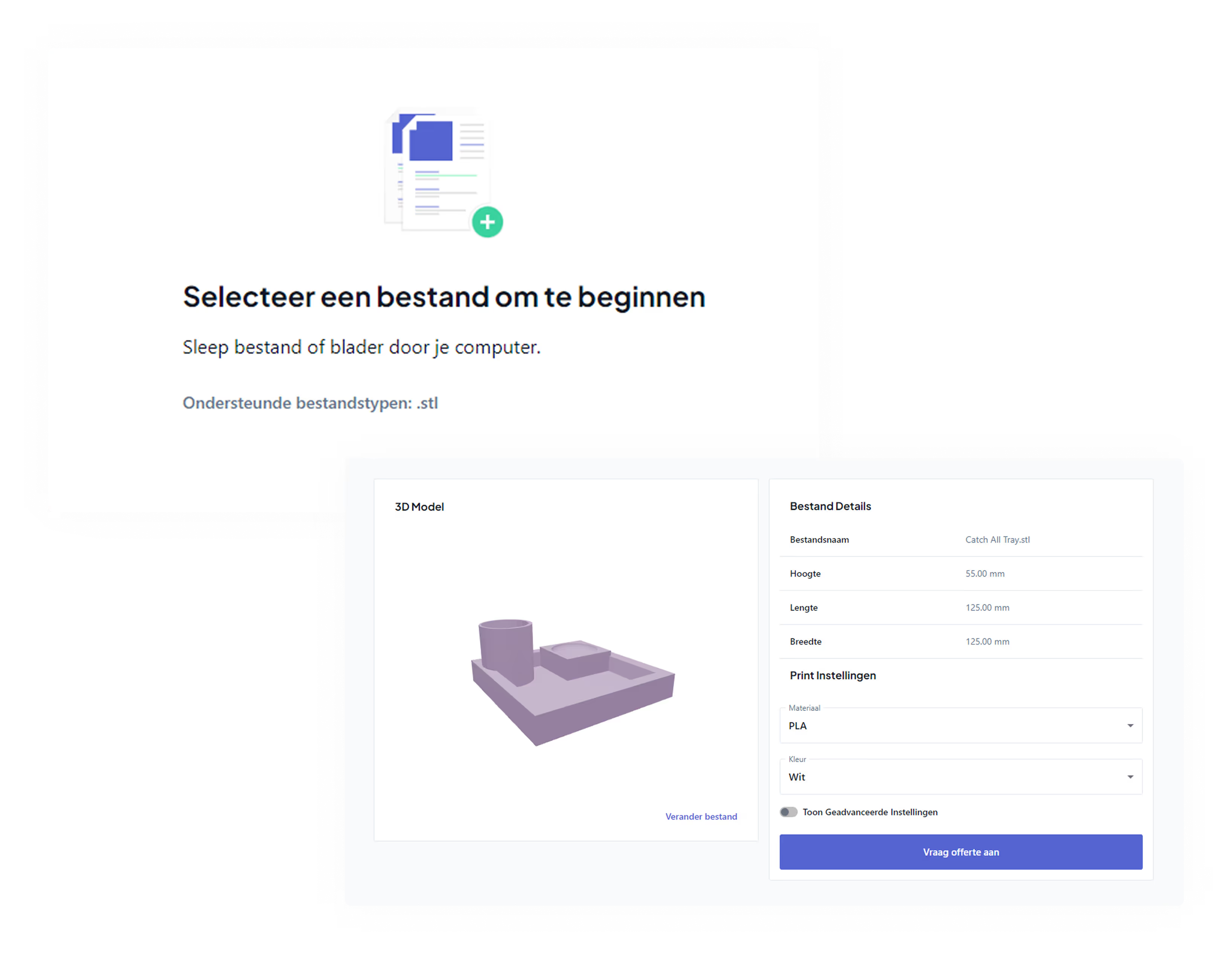
Do you know which material you want? Upload your STL file to our 3D print price calculator and calculate the cost instantly. Both PLA and ABS are available.
Don't have a file yet, or want advice on the right material for your project? Request a free printability check and we'll take a look with you.